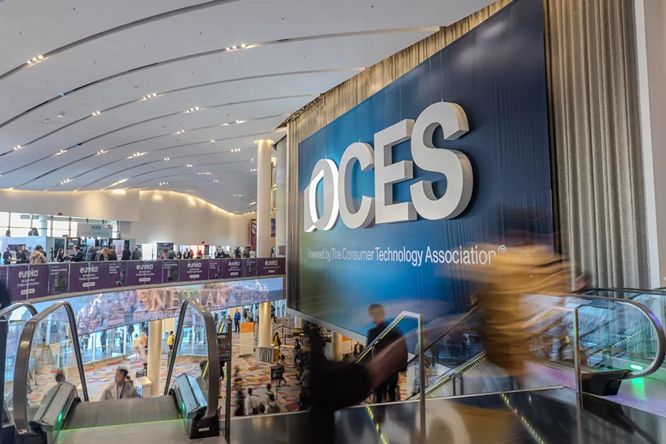

We’re six days out from the start of CES. Here’s my next theory to test on the floor next week.
Products used to compete by giving users more choices, more features, more knobs to turn. Spinal Tap’s “it goes to 11” was the unsung slogan of many product launches at CES over the years. But as attention has become increasingly scarce, products now seem to be designed for fewer decisions. Instead of expanding options, companies are working to reduce the burden of choice.
Yes, AI will play a major role in this shift, and there will be plenty of AI on display at CES. But I’m less interested in the AI itself and more interested in the why behind it. I’ll be looking for examples where AI is being used to remove decisions rather than generate more insight.
In recent years, we’ve seen an explosion of insight. This year, I’m watching for a shift from insight to action. Does the product tell you what happened, or does it tell you what to do next?
The products winning attention and adoption are increasingly the ones that anticipate user needs, act without asking, and above all else, reduce cognitive load. Instead of “choose this or that,” some of the best demos may be showing “we take care of this for you,” or “you don’t have to think about this.”
This isn’t simplicity for its own sake, and it isn’t about reducing capability. It’s about lowering friction in ways that actually drive satisfaction.
If you want to test whether a product is designed around fewer decisions, ask this: how often in demos at CES does the team emphasize the fact that you don’t have to think about something? And what decisions are they working to remove? How are companies aligning products with how humans actually want to make decisions in a world overloaded with choice? This is more than simple automation. It is decision delegation.
The next frontier of competitive advantage may not be features. It may be removing decisions, reducing friction, and letting the product think on behalf of the user. Cognitive load is becoming a core design constraint.
Would love to hear examples you’re seeing where fewer decisions lead to better experiences.
I’ll be back tomorrow with another hypothesis to test at CES 2026.
Related content you might also like:
- AI Productivity Agents Signal the Start of the Agent Era
- Provisioned Agents: The Future of Digital Workers
- Harnessing AI for Enhanced Profitability in Times of Diminishing Demand
- Are remote firms sacrificing long-term knowledge gains for short-term productivity?