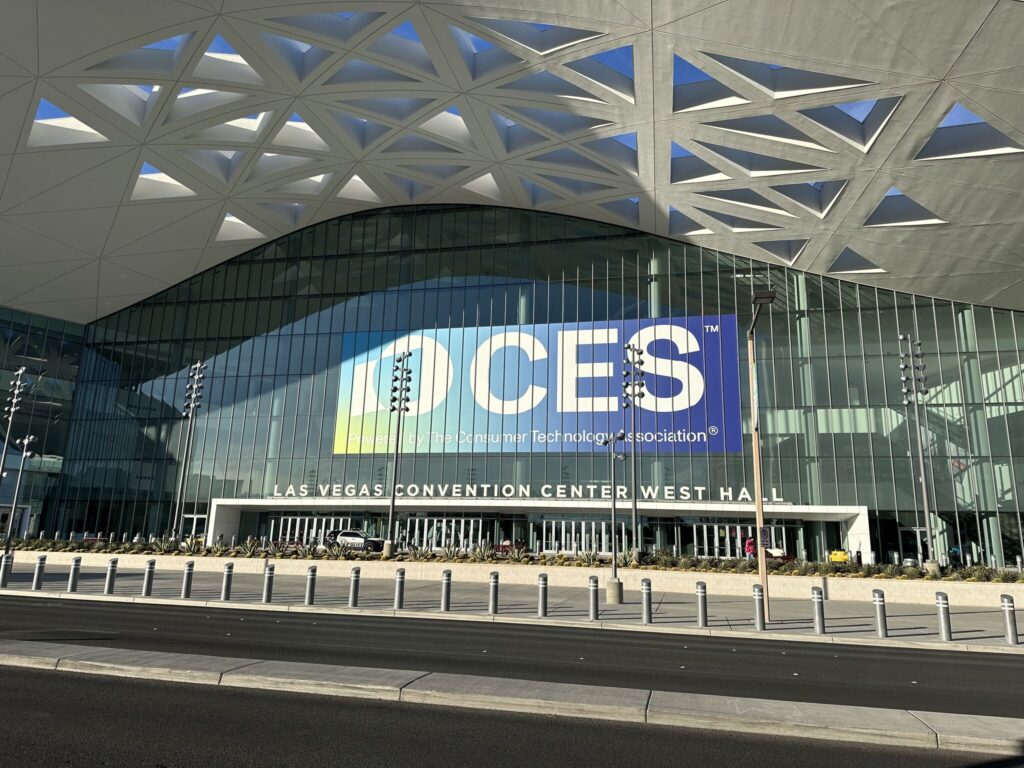

The countdown to CES 2026 has begun. We’re a week out. While most people come to CES each January to see what’s new, I want to offer an alternative approach. Come to CES with a theory or two to test.
The real value of CES isn’t the biggest booth or the loudest demo. It’s the recurring patterns that show up across companies that didn’t intend coordinate. The value of CES is less about novelty and more about signal. But with millions of square feet of space, it’s easy to lose yourself in the noise.
Over the next few days, I’ll share what I’m watching for, the hypotheses I’m testing, and the signals I think will matter most for 2026. If you’re attending too, don’t come just to walk the show floor. Decide what you’re trying to learn before you arrive.
At most major trade shows, about 80% of what you’ll see is incremental. New features. Better versions. Faster versions. Smaller versions. The remaining 20% is where strategy lives. It is in that 20% that I’m trying to find the early indicators of where industry is actually headed.
One of the things that makes CES great is that it pulls together so many different industries in one place. But the trick to CES isn’t trying to see everything. It’s figuring out what to ignore. So here’s the first question to frame what CES means for the year ahead: What is quietly becoming inevitable?
Not what’s new or mind-blowing, but what’s starting to appear everywhere, even when companies aren’t coordinating. What’s being framed as infrastructure instead of innovation. What’s being quietly assumed rather than loudly announced. What no longer needs explaining because it’s becoming table stakes.
I’ll be back tomorrow with another hypothesis to test at CES 2026. But before that, I’d also love to hear what you are watching for and what you hope to discover at CES.
Related content you might also like:
- AI Productivity Agents Signal the Start of the Agent Era
- Embracing AI in Education: A New Frontier at Ferris State University
- Will AI Take My Job? 10 Ways to Stay Relevant
- AI and the Future of Work: Leading Machines and People Together
- The Future of the Workforce: People, Agents and Robots